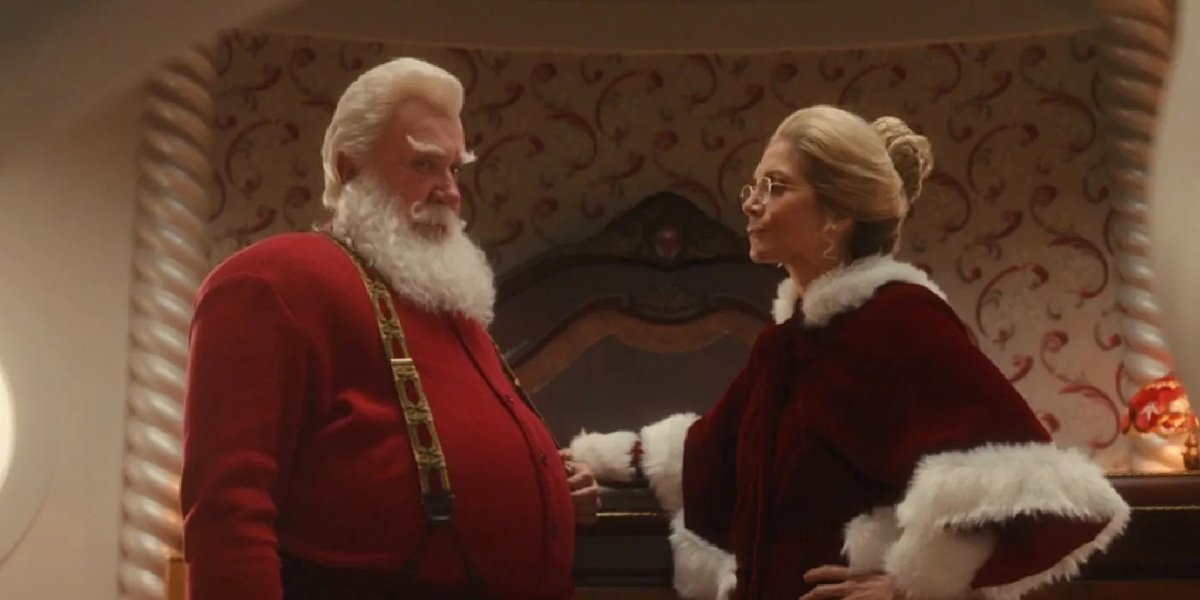
For decades, the jingling sleigh bells and iconic red suit of Tim Allen's Scott Calvin have been synonymous with the magic of Christmas. From a bewildered divorced dad to the embodiment of global cheer, his journey has unfolded across three beloved films and a captivating Disney+ series. But as whispers of a potential "The Santa Clause 4" drift through the frosty air, the crucial question isn't just if it could happen, but how it would seamlessly connect to the rich, evolving tapestry of the Original Trilogy & Series Lore.
This isn't just about another chapter; it's about honoring a legacy, deepening a mythology, and ensuring that any new installment feels like a natural, essential piece of Scott Calvin's extraordinary Christmas odyssey.
At a Glance: Navigating the Santa Clause Universe
- The Original Clause: Scott Calvin's accidental transformation in 1994 set the stage, defining the magic and the rules.
- Expanding the Family: The Santa Clause 2 introduced Mrs. Claus (Carol) and solidified the North Pole's structure.
- Time, Lore, and New Life: The Santa Clause 3 brought time travel, Jack Frost, and the birth of Buddy Claus, deepening the magical stakes.
- The Succession Crisis: The Disney+ series, The Santa Clauses, explored Scott's aging, the search for a successor, and introduced new family members like Sanda.
- Evolving Magic: The series significantly expanded the North Pole's lore, addressing the fading of Christmas magic and the responsibilities of the Kringle family.
- The "4" Challenge: Any new film, The Santa Clause 4, would need to meticulously weave together these threads, addressing Scott's retirement, the new generation, and the state of Christmas magic established in the series.
The Enduring Legacy of Scott Calvin's Christmas Odyssey
The story began quite simply, in 1994, with a man named Scott Calvin, a cynical toy executive whose life was about to be irrevocably changed by a rather unfortunate rooftop incident. When Santa Claus takes a tumble and, upon Scott's accidental urging, vanishes, the "Santa Clause" contract is triggered. Scott reluctantly dons the suit, and thus begins an eight-year transformation into the very figure he initially disbelieved in. This first film, The Santa Clause, isn't just a Christmas classic; it's the foundational text of this entire universe. It established the core rules: the suit, the sleigh, the magical transformation, and the North Pole as a bustling, enchanting hub. It also introduced Charlie, Scott's son, whose unwavering belief provided the emotional anchor for Scott's metamorphosis.
This initial outing grossed an impressive $190 million worldwide, solidifying Tim Allen's working relationship with Disney and proving that audiences were hungry for a fresh, slightly irreverent take on the Santa myth. It taught us that being Santa wasn't just a job; it was a destiny, chosen not by bloodline but by a magical, contractual obligation.
Expanding the Mythos: From Bachelor Santa to Family Man
Eight years after Scott first took flight, The Santa Clause 2 (2002) posed a new challenge: a clause requiring him to find a Mrs. Claus by Christmas Eve. This wasn't merely a romantic subplot; it was a crucial expansion of the lore. It formalized the "Mrs. Claus" role, which Carol Newman bravely stepped into, and solidified the idea of a Santa family. The film also introduced the delightful Council of Legendary Figures—Father Time, the Easter Bunny, the Tooth Fairy, Cupid, Sandman, and Mother Nature—hinting at a larger, interconnected magical world.
This sequel further explored the responsibility of Santa, not just the magic. Scott's struggle to balance his Santa duties with his personal life, coupled with the rogue Toy Santa subplot, presented a deeper examination of identity and purpose. The North Pole itself grew in complexity, showcasing more of its inner workings and the diligent elf workforce. It became clear that being Santa was less about one man and more about an entire ecosystem of belief and enchantment.
Just four years later, The Santa Clause 3: The Escape Clause (2006) pushed the boundaries of the established lore even further. Set twelve years after the original, it introduced the concept of an "Escape Clause," a magical loophole Jack Frost uses to hijack the timeline and prevent Scott from ever becoming Santa. This high-stakes plot introduced alternate realities, demonstrating the fragility of the Santa myth and the profound impact of Scott's role. It also marked the birth of Buddy Claus, Scott and Carol's son, weaving the Santa lineage directly into the Calvin family tree. The film's critical reception was the weakest of the trilogy, yet it added vital layers to the franchise's mythology, particularly regarding time, fate, and the active struggle against forces that would diminish Christmas spirit.
The Santa Clauses Series: A New Era and Deeper Lore
The franchise enjoyed a robust return on Disney+ with The Santa Clauses, premiering in 2022. This series picks up twenty-eight years after Scott first became Santa, finding him at 65, experiencing the physical tolls of immortality, and contemplating retirement. This premise alone was a monumental lore development, directly addressing the aging of an immortal being and the question of succession, something the original films only hinted at through the initial clause.
The series introduced us to a new generation of Calvins: Scott and Carol's children, Buddy 'Cal' Calvin Claus and Sanda Calvan Claus. Cal, a former "non-believer" struggling with his identity, and Sanda, who exhibits latent magical abilities, became central figures. The notion of magic fading due to dwindling belief isn't new in fiction, but The Santa Clauses made it a central conflict, pushing the narrative towards the need for a new, adaptable Santa.
The succession storyline led to the casting of Simon Choski as Scott's potential replacement, a tech-savvy entrepreneur who initially represented a departure from traditional Santa. This arc explored the tension between old-world magic and modern efficiency, asking what Santa truly means in the 21st century. The series also expanded the roles of pivotal North Pole characters like Betty and Noel, hinting at a broader network of magical beings beyond just the Council of Legendary Figures. The mythology surrounding the "Kringle" line and the "legacy" of Santa Claus deepened significantly, suggesting a more intricate history and perhaps even a lineage of magic.
The series, renewed for a second season, has taken the franchise into new territory, evolving the characters, expanding the magical world, and tackling complex themes about legacy, change, and the very nature of belief. It essentially serves as the de facto "Santa Clause 4" in a serialized format, covering ground a fourth film likely would have.
Weaving a "Santa Clause 4" into the Tapestry: Key Lore Connections
If a feature film titled The Santa Clause 4 were to emerge, it would face the unique challenge of building upon nearly three decades of established lore, especially the significant developments from The Santa Clauses series. It couldn't simply ignore Scott's retirement or the ongoing story of his children and potential successors.
The Core "Santa Clause" Contract: A New Interpretation?
The original clause was accidental. The series introduced the concept of a chosen succession. A Santa Clause 4 would need to clarify the current state of the "clause."
- Scott's Return: If Scott Calvin were to be Santa again, would it be a direct reversal of his retirement, perhaps due to a new crisis requiring his specific touch? Or would he serve in a mentor role, distinct from the traditional Santa mantle?
- The Next Santa: Is Simon Choski still the Santa? Has Cal or Sanda fully embraced their destiny? A new film could focus on their challenges, with Scott as a guiding hand. The title implies Scott is still central, so a creative way to bring him back into the primary narrative without undermining the series' arc would be essential.
The Calvin Family Legacy: New Roles, New Powers
The family dynamic has always been the heart of the franchise.
- Charlie Calvin: Scott's original son, Charlie, has largely remained outside the North Pole since his youth. Could a new film bring him back, perhaps as a connection to the human world, or even as a surprise successor in a moment of dire need? His understanding of both worlds could be invaluable.
- Cal and Sanda: The series set up Cal's journey of self-discovery and Sanda's burgeoning magical abilities. A Santa Clause 4 could fully realize their potential, perhaps showcasing Sanda's magic in a significant way, or Cal stepping up to a major leadership role at the North Pole or even beyond. They are the new generation, and their stories are rich with potential.
The North Pole Infrastructure: Adapting to Change
The North Pole has evolved from a simple workshop to a complex magical hub.
- Elven Society: The elves have always been the backbone. Have they fully embraced technological advancements introduced in the series? Or is there a divide between traditionalists and innovators? This internal conflict could drive a subplot.
- Global Reach: The series hinted at a broader magical community. Could a Santa Clause 4 explore the North Pole's relationship with other magical enclaves or global holiday traditions in greater detail?
Council of Legendary Figures & Past Antagonists
The universe is populated by other magical beings.
- Cosmic Crisis: The Council (Father Time, Tooth Fairy, etc.) have appeared intermittently. Could a larger threat emerge that requires the combined power of all legendary figures, escalating the stakes beyond just Christmas?
- Jack Frost's Shadow: Jack Frost's manipulation of the timeline in The Santa Clause 3 was a massive threat. Is his magical influence truly gone, or could there be lingering effects or a new villain with similar capabilities who seeks to undermine not just Santa, but the very fabric of magical belief?
Potential Plot Lines & Thematic Directions for "Santa Clause 4" (Considering Lore)
Given the extensive lore, a Santa Clause 4 would have a wealth of material to draw from, but also a responsibility to push the narrative forward meaningfully.
- The Return of a Greater Threat: What if the fading of Christmas magic, a central theme in The Santa Clauses, isn't a natural decline, but orchestrated? A new, powerful entity—perhaps even a forgotten figure from an ancient Christmas lore—could emerge, threatening not just belief, but the very existence of joy itself. This would demand Scott's return to a central, perhaps even active Santa role, as his experience and magic might be unique in countering such a threat.
- Generational Gauntlet: The film could pivot to focus squarely on Cal and Sanda, or even Simon Choski if he is the current Santa, facing a crisis that only the new generation can solve. Scott would be a mentor, a sage, perhaps still struggling with the temptation to resume his duties, but ultimately trusting his children or successor to forge their own path. This would be a passing-of-the-torch story that respects Scott's retirement while keeping him pivotal.
- An Inter-Dimensional Christmas: Building on the time-travel elements of The Santa Clause 3 and the expanded magical world of the series, a film could explore alternate realities where Santa never existed, or where Christmas is celebrated in profoundly different, perhaps darker, ways. Scott and the gang would have to protect the "prime" Christmas reality, perhaps even rescuing elements of their own past.
- The Human Connection: What if the biggest threat isn't magical, but a profound loss of faith in humanity itself? Scott's initial journey was about a cynic learning to believe. A Santa Clause 4 could explore the role of Santa in a world increasingly disconnected, perhaps requiring a global effort to rekindle true spirit, involving everyday people alongside magical beings. Charlie Calvin, with his human life, could play a crucial bridge role here.
The key for any Santa Clause 4 is to balance reverence for the past with innovation. It can't simply redo old plots; it must use the existing lore as a springboard for new adventures and character development, especially considering Scott's arc through the series.
Common Misconceptions & Clarifications in the Santa Clause Lore
The long-running franchise has naturally led to some misunderstandings about its rules and timeline. Let's clear a few things up:
- Is Santa's power tied to bloodline? No. While Scott's children inherit a connection to the North Pole and magic, the "Santa Clause" itself is a contractual obligation for whoever dons the suit after the previous Santa's demise. Scott's children are special because he is Santa, not because they were born into a magical lineage. The series hinted at the "Kringle" line having some inherent magic, but the mantle of Santa is still a clause, not a birthright.
- Can Santa just retire anytime? The series The Santa Clauses established that Scott can retire, but it's not a simple process. It requires finding a suitable replacement and a formal transfer of power. The original films suggested the Santa identity was permanent unless the clause was broken (as Jack Frost attempted). The series added nuance to this.
- Are the films and series in the same continuity? Absolutely. All films and The Santa Clauses series follow a strict chronological order, mirroring their release dates. The series is a direct continuation of the events of The Santa Clause 3, picking up nearly two decades later. This is crucial for The Santa Clause 4 to acknowledge.
- Is there more than one Santa? No, in the established universe, there is only one true Santa at a time (discounting the rogue Toy Santa). The Council of Legendary Figures are distinct roles, not alternate Santas.
The Undeniable Appeal: Why We Keep Coming Back to the North Pole
Why does this franchise, nearly thirty years after its inception, continue to resonate? It's a blend of several magical ingredients. At its core is Tim Allen's performance. His blend of sarcastic humor and genuine warmth brought a fresh, relatable humanity to the often-stuffy figure of Santa Claus. He made Santa a character, not just an icon.
Beyond Allen, the films and series expertly blend fantasy with grounded family drama. Scott Calvin's journey isn't just about magic; it's about a divorced father learning to be present for his son, finding love, and accepting extraordinary responsibility. The North Pole, while fantastical, always feels like a vibrant, lived-in world, full of charming elves and ingenious contraptions.
Ultimately, the franchise taps into a universal yearning for belief, for magic in the mundane, and for the enduring spirit of Christmas. It reminds us that even the most cynical among us can find wonder if we just open our hearts. This potent mix ensures that stories from this universe, including a potential The Santa Clause 4, will always find a receptive audience.
What "Santa Clause 4" Must Deliver
Should a Santa Clause 4 indeed come to pass, its success will hinge on its ability to both respect the foundation laid by the original trilogy and embrace the expansive, evolving narrative presented in The Santa Clauses series. It cannot be a standalone piece; it must feel like a vital next chapter in a beloved saga.
First, it needs to provide a compelling reason for Scott Calvin to be at the center again, even if not fully as Santa. His character arc through the series saw him grappling with retirement and legacy. A new film could explore the wisdom of an elder statesman Santa, called upon for a unique challenge that only his decades of experience can solve.
Second, it must seamlessly integrate the new generation of Calvins and the new lore surrounding magic, succession, and the broader magical world. Cal and Sanda's journeys are far from over, and their roles in protecting Christmas are poised to become even more significant.
Finally, and perhaps most importantly, The Santa Clause 4 must recapture the heart and humor that made the franchise a holiday staple. It needs to provide a fresh adventure, deepen our understanding of this magical world, and reinforce the enduring message that belief, family, and the spirit of Christmas are the most powerful forces of all. The magic isn't just in the suit; it's in the story, and that story is far from over.